
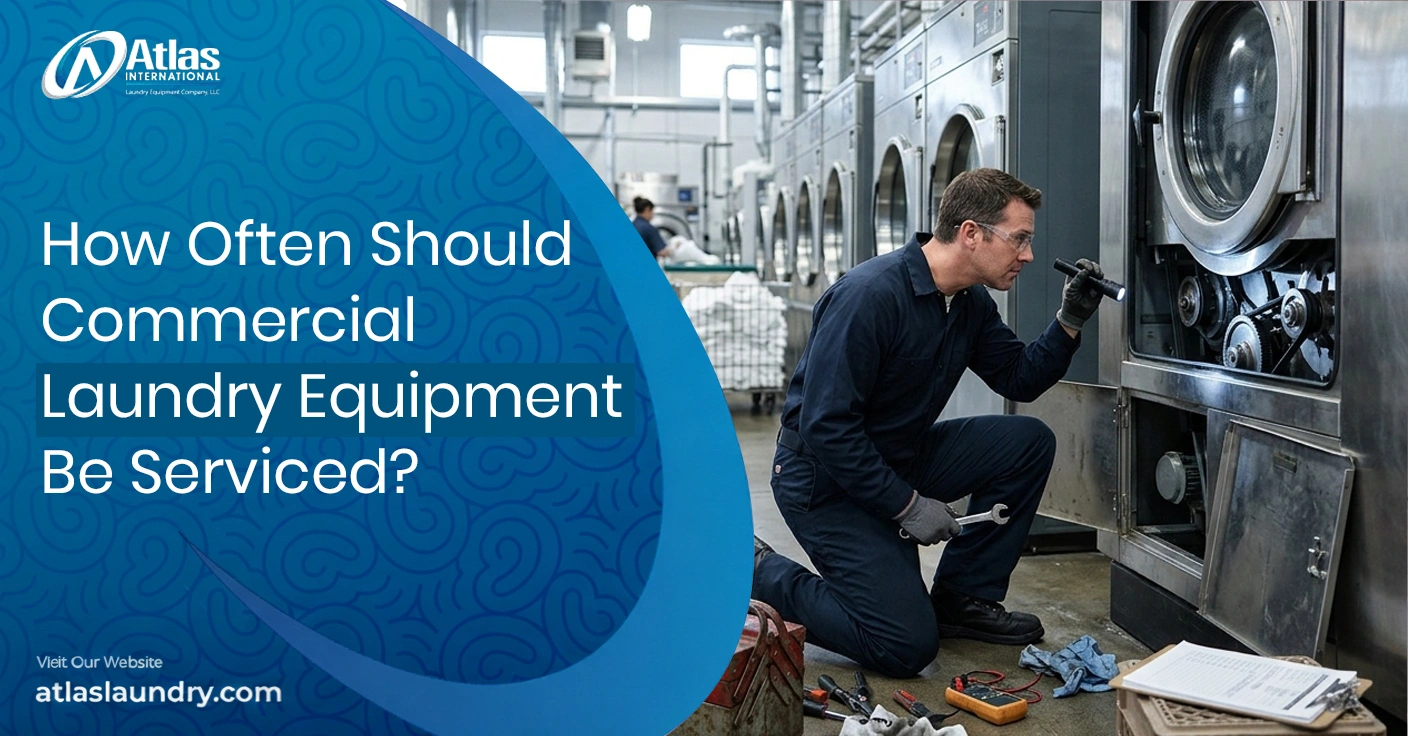
Commercial laundry equipment should be serviced professionally at least twice a year while staff handle routine maintenance on a daily, weekly and monthly basis. Heavy-use environments such as high volume laundromats, hotels and healthcare facilities should have professional inspections every three months to prevent sudden breakdowns. Staying on top of scheduled service keeps washers and dryers running efficiently, lowers utility costs and can extend the overall life of your machines.
Keeping your equipment running is essential to your business. A single down washer can ruin an entire shift, so taking care of machines before they break is one of the most effective ways to protect your bottom line.
Key Takeaways
- A clear maintenance routine helps business owners prevent costly downtime, lower monthly power bills and avoid breakdown emergencies.
- Daily staff tasks like cleaning out lint filters and wiping down rubber seals stop minor wear from turning into bigger issues.
- High-volume laundromats, hotels and hospitals should have a professional technician inspect internal belts and motors every three months.
- Regular maintenance protects your long-term investment and keeps your business running without unexpected stops.
Recommended Service Schedule for Commercial Laundry Equipment
Commercial washers and dryers need a mix of daily staff habits and scheduled professional visits. Because these machines work hard every day, small amounts of wear can build up quickly if no one is monitoring them.
For most standard commercial setups, a technician visit every six months is a good baseline. During these visits, the technician opens the cabinets, checks electrical lines, inspects motor parts, tests water valves and confirms dryer gas connections are safe. If your facility runs continuously or handles heavy loads daily, a quarterly schedule is safer. Always follow the manufacturer’s maintenance schedule in your equipment manual. If it differs from the intervals here, the manual takes priority.
| Service Schedule Tier | Recommended Frequency | Facility Type | Operational Focus |
| Routine Staff Care | Daily to Weekly | All Laundry Facilities | Cleaning lint screens, wiping door seals, checking hoses and rinsing soap trays. |
| Standard Professional Service | Every 6 Months | Small Laundromats & Apartments | Inspecting belts, checking electrical loads, testing drain valves and testing heaters. |
| High-Volume Service | Every 3 Months | Hotels, Hospitals & Busy Laundromats | Checking motors, testing bearings, calibrating gas lines and clearing main vents. |
An experienced technician knows what to look for and can spot a fraying belt or leaky valve months before it fails and floods your floor.
Factors Affecting Your Service Frequency
No two laundry rooms are identical. How often your machines need work depends heavily on how you use them each day.
Daily Cycle Volume
A laundromat running thirty wash cycles per machine every single day will naturally require more frequent maintenance than an apartment building laundry room that sees five cycles daily. Higher usage means faster wear on belts, bearings and drive motors.
Type of Fabrics Washed
Facilities that process heavy items like shop towels, thick blankets or soil heavy linens put extra strain on washer suspension springs and drive belts. Heavy fabrics also produce more lint and debris, which can clog dryer vents and drain pumps much faster.
Water Quality in Your Area
Hard water causes mineral scale to build up inside heating elements, water inlet valves and internal piping. If your facility is in an area with hard water and does not use a water softener, plan for more frequent valve checks and descaling.
Age and Condition of Machines
Older equipment naturally requires more frequent checkups to catch worn gaskets, loose drive belts and tired electrical connections before they cause complete system failure.
Key Maintenance Intervals
Splitting up your service jobs makes everything easier to manage for your team:
| Maintenance Frequency | Responsible Party | Core Maintenance Tasks |
| Daily | Onsite Staff | Clean dryer lint filters after cycles, wipe down rubber door gaskets, check washer drums for loose objects and leave doors open to prevent mold. |
| Weekly | Onsite Staff | Deep clean soap dispenser drawers, inspect water inlet hoses for cracks, bulges, or leaks, wipe down machine exteriors and clean dryer exhaust duct screens. |
| Monthly | Facility Manager | Inspect drain pump filters, check water inlet screens for debris buildup, clear main dryer exhaust lines and check belt tension. |
| Every 3 to 6 Months | Professional Technician | Test motor current, inspect bearings and drive pulleys, check gas lines and burner ignition (by a licensed technician), calibrate water temperature and test electrical connections. |
Keep a written service log. Record the date, technician name, work performed and any parts replaced. This gives you proof for warranty claims and helps your team spot recurring problems.
Essential Tips for Protecting Your Equipment
- Clean Dryer Lint Screens Daily: Clogged lint screens choke off airflow. That makes the dryer run longer, spikes your power bill and creates a serious fire hazard. Lint buildup is a leading cause of commercial dryer fires, so make this a non-negotiable daily task.
- Inspect Water Hoses Regularly: Look closely at supply hoses weekly. Check for cracks, bulges or wet spots near the connections so you can replace them before they fail.
- Keep Detergent Drawers Clean: Soap residue turns into a thick paste over time. Rinsing out those trays prevents clogs and keeps your wash drums smelling fresh.
- Avoid Overloading Machine Drums: Jamming too many heavy clothes into a drum strains bearings and drive belts. Load evenly so the machine stays balanced during fast spin cycles.
- Watch for Warning Signs: Stop using a machine and call a technician if you notice unusual noises, longer cycle times, water leaks, burning smells or tripped breakers.
Training your staff on how to use the equipment properly goes a long way. When your team knows how to load machines correctly and speaks up about weird noises right away, your equipment lasts years longer.
Conclusion
Sticking to a solid laundry machine maintenance routine lets you protect your business from costly operational delays. Combining simple daily habits with professional technician visits every three to six months keeps your utility bills down and stops surprise breakdowns. If you want to set up routine care or need expert help with your machinery, contact Atlas International today to talk with experienced commercial laundry specialists.
Frequently Asked Questions
What happens if you do not service commercial laundry machines regularly?
Skipping service leads to higher energy bills, slower wash times, frequent machine breakdowns and a much shorter equipment lifetime. Fire risks also go up due to lint buildup inside dryer lines.
How long does a commercial washing machine usually last?
With good daily care and regular professional checkups, high quality commercial washers easily last 10 to 15 years even under heavy daily use. However, lifespan varies widely by model, duty cycle and water quality.
Why are my commercial dryers taking longer to dry clothes?
Slow drying is almost always caused by blocked lint screens, choked exhaust ducts or a failing heating element. Clearing out the vent pipes usually gets things back to normal fast.