
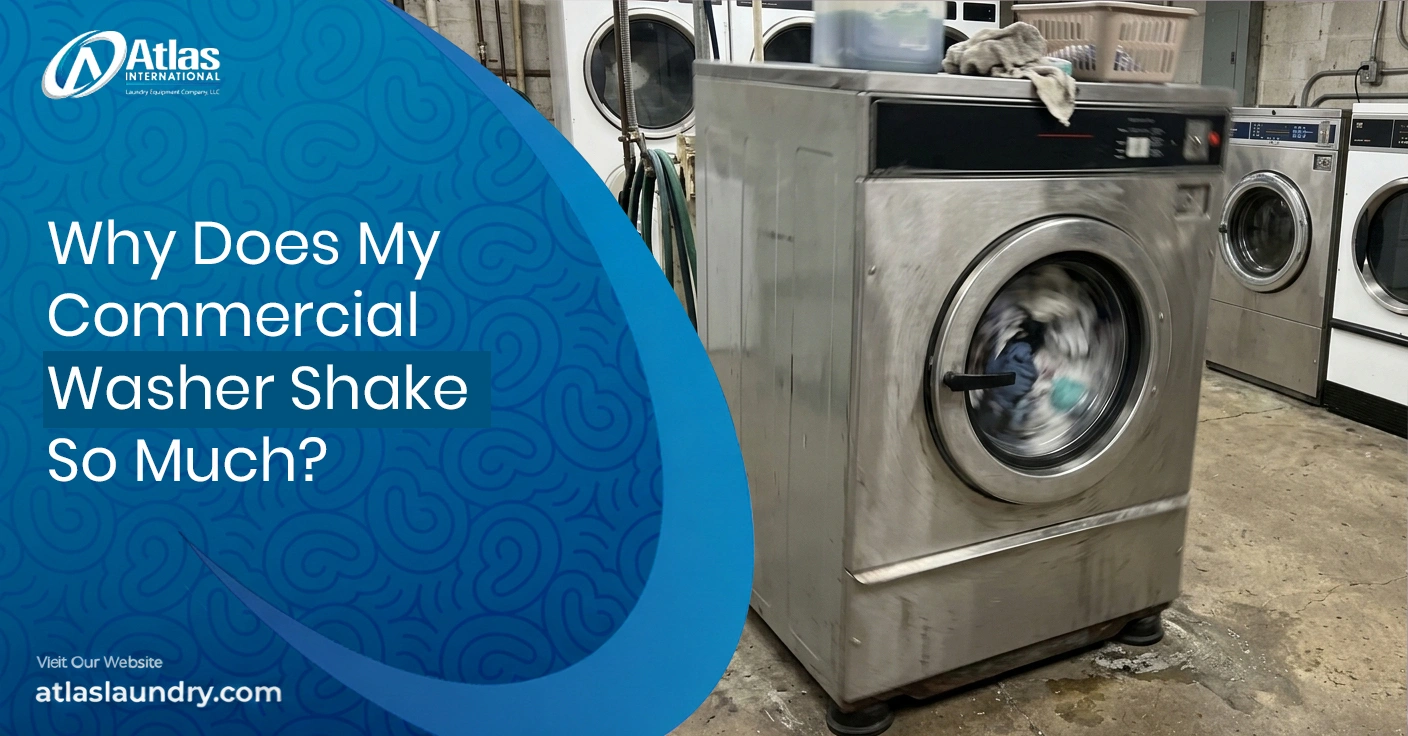
A commercial washer usually shakes because the load is unbalanced or the machine is not level. Worn shock absorbers and springs come next. Damaged bearings and loose bolts are also common causes. High spin speeds make every one of these problems worse. Most fixes start with simple checks you can do in a few minutes. Start by checking the load and the feet. If the shaking continues, stop the machine and call a technician before a small issue turns into a costly repair.
Key Takeaways
- Check the load first. Uneven or oversized loads cause most commercial washer shaking.
- Level the machine and tighten the feet. A rocking washer will shake at every spin.
- Listen for banging or grinding. Those sounds point to worn parts that need service.
- Stop a washer that walks across the floor. Continuing to use it can damage the floor and the machine.
- Follow load limits and schedule inspections to keep the shaking from coming back.
What Causes a Commercial Washer to Shake Excessively?
Most shaking comes from six sources: the load, the footing, worn suspension, damaged bearings, loose parts and spin speed. Here is how each one works.
Unevenly Distributed Laundry Loads
Heavy items bunch up when they get wet. Towels, mop heads and bedding twist into a lump. The lump spins against one side of the drum and throws the machine off balance. Mixed loads of heavy and light items make it worse. Small loads can bunch up too. Spread the items out before you start the cycle and sort by weight.
An Unbalanced or Uneven Washer
A washer that sits crooked cannot spin smoothly. One foot may be higher than the others. The floor may slope slightly. Even a small tilt adds up at high speed. The machine then rocks and bangs against its frame. Use a level on top of the cabinet. Check front to back and side to side.
Worn Shock Absorbers and Suspension Springs
Shock absorbers and springs hold the drum steady while it spins. They wear out over time. Weak shocks let the drum swing wildly. Broken springs leave one side without support. You may see the cabinet shift or hear a hollow thump. This wear builds slowly. Many owners do not notice until the shaking gets bad.
Damaged Bearings or Drum Components
Bearings let the drum turn freely. When they wear down the drum wobbles. You may hear a rumble or a grinding noise as it spins. Water can get past a failed seal and rust the bearing. A bent drum spider or cracked drum support can also cause shaking. These parts are costly to replace. Early repair saves money.
Loose Bolts and Internal Parts
Constant vibration loosens hardware. Mounting bolts and motor brackets can work loose. On a new machine, the shipping bolts may still be in place. Those bolts lock the drum for transport. They must be removed before use. A loose counterweight or panel can rattle as well. Check for any hardware that has backed out.
Excessive Spin Speed for the Load
Commercial washers spin fast to pull out water. High speed puts stress on every part. A load that is too heavy or too bulky cannot handle it. The drum then loses balance. Some machines let you change spin speed or program. Use a lower speed for bulky items like blankets and rugs. A gentler spin reduces vibration.
How Can You Troubleshoot a Shaking Commercial Washer?
Start with the easy checks. Then move to the machine itself.
Check the Load Size and Distribution
Stop the cycle and open the door when it is safe. Look at how the items sit in the drum. Pull apart any tangled lumps. Remove items if the drum looks too full. Then restart the cycle. If the washer runs smoothly now, the load was the cause. Train staff on proper loading to prevent the issue.
Make Sure the Washer Sits Level
Place a level on the top of the washer. Check the bubble in both directions. Adjust the feet until the machine is level. Then tighten the lock nuts so the feet cannot move. Retest the machine with a normal load. A level washer often calms shaking right away. Check again after a week since floors can settle.
Inspect the Washer Feet and Floor Stability
Look at each foot. Rubber pads can wear thin or crack. Bolts that anchor the machine to the floor can loosen. The floor itself must be solid. A weak or cracked slab will flex under a spinning load. Press on the floor near the machine. If it moves, ask a contractor to look at it.
Look for Loose Parts or Visible Damage
Turn off the power and unplug the machine. Remove the access panel if you are trained to do so. Look for loose bolts and broken springs. Check the shock absorbers for oil leaks. Inspect the belts and the motor mounts. Take photos of anything odd. A technician can use them to plan the repair.
Check for Error Codes and Unusual Noises
Many washers show an imbalance code on the display. Write it down and look it up in the manual. Listen to the sounds during the spin. Thumping often points to load or suspension problems. Grinding points to bearings. Squealing can mean a belt problem. Notes about the sounds help a technician find the fault fast.
When Does Commercial Washer Shaking Indicate a Serious Problem?
Some shaking is a warning. Stop the machine if you notice any of these signs.
Loud Banging During the Spin Cycle
A loud bang means the drum is hitting the frame. This can happen when shocks fail or the drum comes loose. Continued use can crack parts or break the cabinet. Stop the cycle and unload the machine if you can do it safely. Call for service. Do not run the washer again until it is checked.
Excessive Movement Across the Floor
A washer that walks is dangerous. It can pull on water lines and electrical cables. It can also crack the floor. Walking often means the machine is not anchored well or the suspension has failed. Shut the machine off and move it back into place. Have a technician check the mounts and the floor.
Grinding Sounds or Burning Smells
Grinding usually comes from failed bearings. A burning smell can come from a slipping belt or an overworked motor. Both signs point to serious wear. Turn off the power at once. Running the machine can damage the drum and the motor. Repair costs rise quickly when these parts fail together.
Repeated Shaking With Small Loads
If a small load still shakes the machine, the load is not the problem. Look for worn shocks or springs. Check the bearings and the leveling. A machine that shakes with every load needs a full inspection. Do not keep adjusting the load. Fix the root cause.
How Can You Prevent Excessive Shaking in a Commercial Washer?
Good habits keep machines steady. A little care goes a long way.
Follow Load Capacity Guidelines
Every washer has a rated capacity. Stay within it. Weigh loads if you can. Overloading is the leading cause of imbalance. Post the capacity near the machine. Remind staff that wet laundry weighs more than dry. A correct load protects the suspension and the bearings.
Keep the Washer Level and Secure
Check the level every few months. Floors shift and feet loosen over time. Tighten the anchor bolts and the lock nuts. Replace worn rubber pads. Keep the area around the machine clear so you can see problems early. A stable washer lasts longer.
Schedule Routine Equipment Inspections
Plan an inspection every few months. A technician can test the shocks and springs. They can check the bearings and the belts. They can tighten hardware you cannot reach. Keep a log of the findings. Patterns in the log show which machines need attention first.
Replace Worn Components Before They Fail
Replace shocks and springs at the first sign of wear. Do not wait for a breakdown. New parts cost less than a failed drum. Order spare parts for your most used machines. Fast repairs reduce downtime. Your customers or staff stay happy when machines run.
Conclusion
Most commercial washer shaking comes from a bad load or an unlevel machine. Worn suspension and bearings and loose hardware cause the rest. Check the load and the feet first. Listen for banging or grinding. Stop a machine that walks or smells hot. Then schedule service before small issues grow. Regular inspections and sound load habits keep your washers steady for years.
Atlas International is here if you need help with a shaking washer; we supply and support commercial laundry equipment. Our team can inspect your machines, advise on repair or replacement and help you plan your laundry room. Contact us today to get your equipment running smoothly.