
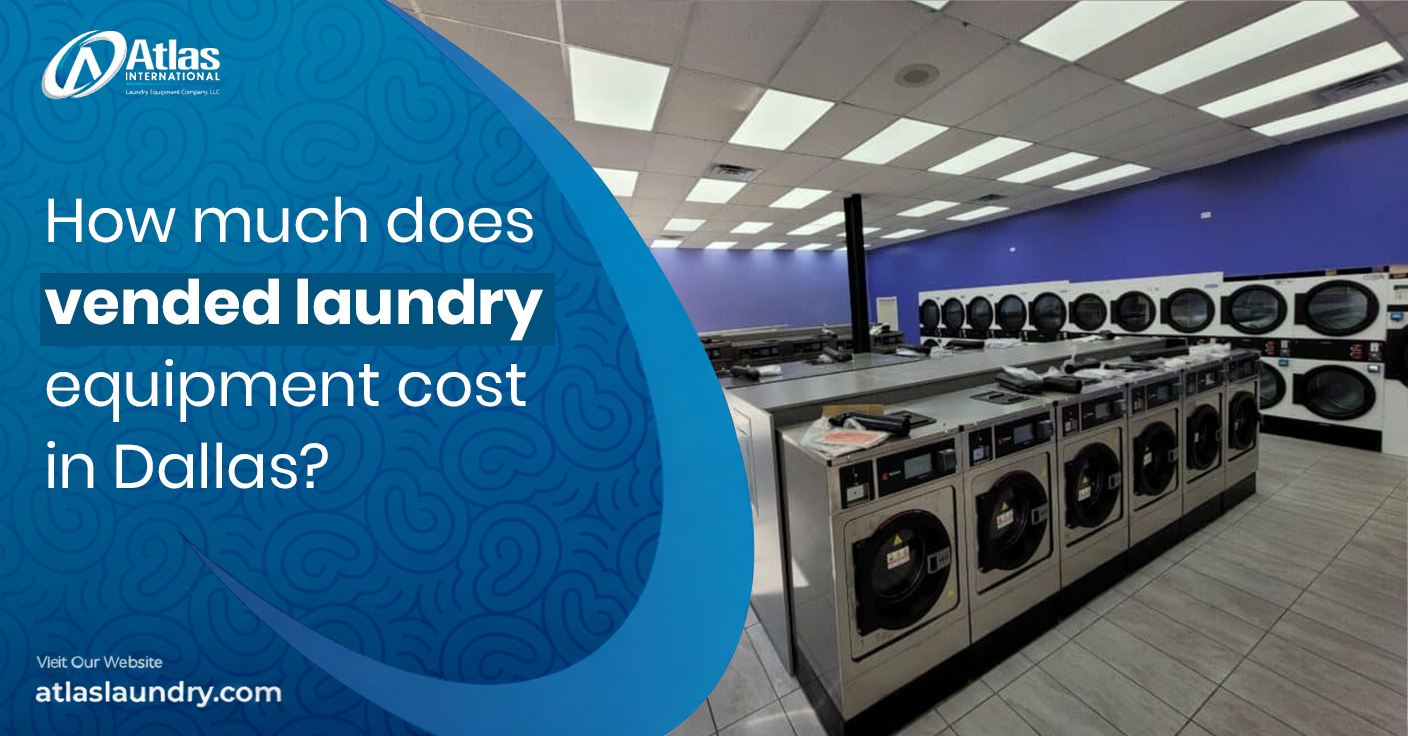
Opening a new laundromat or upgrading an existing facility in North Texas is a major financial undertaking that requires a clear understanding of upfront equipment expenses. Navigating the actual market rates for machinery is the only way to ensure your facility remains profitable from the day your doors open to the public.
Key Takeaways
- Commercial washer costs range from $3,000 for small units to over $22,000 for massive, industrial-grade machines.
- Commercial dryers typically cost between $2,500 for single units and $9,000 for high-capacity stack models.
- Modern payment integrations add to upfront machinery costs but significantly reduce long-term management labor.
- Freight, local installation, and city utility hookup fees can add thousands of dollars to your total initial setup budget.
- High-efficiency machines reduce monthly water and gas bills, speeding up the return on your capital investment.
Average Cost of Vended Laundry Equipment in Dallas
When budgeting for a commercial facility, the physical machinery will inevitably consume the largest portion of your capital. The total financial investment depends heavily on cylinder capacity, brand reputation, and the mechanical configuration of your layout. To give you a realistic baseline for the local market, the base prices for new vended laundry equipment generally fall into these standard commercial categories:
- Small Front-Load Washers (20-30 lbs): $3,000 to $6,500 per unit. These compact models are perfect for smaller retail footprints, single professionals, or quick wash cycles that keep customers moving smoothly through your store.
- Mid-Sized Washer-Extractors (40-60 lbs): $7,500 to $13,000 per unit. These machines are commonly used in family laundromats because they balance capacity and daily performance.
- Large Mega-Washers (80-100 lbs): $16,000 to $22,000 per unit. Built specifically to handle oversized comforters, bulky rugs, and massive multi-bag family loads, these units command the highest vend prices per cycle on your sales floor.
- Single-Pocket Dryers: $2,500 to $5,500 per cylinder. These standard configurations offer reliable performance, with prices that vary entirely based on whether the physical building requires an electrical draw or standard natural gas hookups.
- Stack Dryers (Dual 30-45 lb pockets): $6,000 to $9,500 per stack frame. This setup is the gold standard for maximizing tight retail square footage because it effectively doubles your drying capacity without expanding the physical footprint of the machinery.
8 Critical Factors That Affect Vended Laundry Equipment Costs
Purchasing commercial machinery involves much more than just looking at a base price tag. Multiple operational, structural, and geographic variables will dictate the final total on your installation invoice.
1. Payment Technology and Connectivity
Many laundromats in Texas are now switching from coin-only systems to cashless payment technology. Upgrading to modern cashless vended laundry equipment introduces a higher upfront cost but transforms your long-term margins. Adding hardware like smartphone mobile app integration, magnetic card readers, or a centralized pay station kiosk adds roughly $300 to $1,000 to the price of each machine.
However, this technology saves you money over time by completely eliminating the manual labor hours required to collect, count, and deposit heavy coins at the bank. Cloud-based management systems also allow you to adjust pricing remotely to manage peak-hour utility surges or launch digital loyalty programs that keep customers coming back to your store.
2. G-Force Extraction Speed
The internal engineering of a commercial washer directly impacts its initial purchase price and your monthly overhead bills. Rigid-mount washers are cheaper upfront because they feature simplified frames that must be bolted into a thick, poured concrete slab to absorb spin vibrations. Premium soft-mount washers cost more because they feature complex internal heavy-duty springs and shock suspension systems.
These high-end systems allow the drum to spin at speeds up to 400 G-force or higher, pulling significantly more water from fabrics during the final extraction phase. This directly slashes customer drying times by up to 50%, saving you massive amounts of money on your store’s natural gas bill while cutting down your overall wear and tear.
3. Installation and Infrastructure Readiness
The physical state and municipal zoning of your chosen building play a massive role in the final cost of your vended laundry equipment Dallas project. If you are retrofitting an older commercial property or leasing a retail space in historic areas like Deep Ellum or East Dallas, utility build-out expenses can occasionally match the price of the machinery.
High-volume commercial laundromats require robust concrete floor reinforcement, massive dedicated water mains, specialized drainage troughs, and complex gas venting manifolds. If your retail space lacks this high-capacity infrastructure, hiring master plumbers, structural engineers, and commercial electricians to prepare the property will heavily expand your initial setup budget.
4. Water Efficiency Levels and Utility Ratings
Water costs in the Dallas-Fort Worth metroplex are a permanent operational consideration, and your equipment choices directly impact your monthly overhead. Premium machines feature advanced programmable microprocessors that precisely calculate exact water levels based on load weight.
While these ultra-high-efficiency machines carry a higher price tag at purchase, they drastically lower your ongoing utility consumption. Choosing machines with low water-per-cycle ratings can reduce your store’s monthly water and sewer expenses by thousands of dollars, making the initial price premium highly worthwhile over the facility’s lifecycle.
5. Brand Tier and Manufacturer Warranties
The specific brand names you choose to line your store walls will introduce varying tiers of upfront cost and asset protection. Tier-one commercial brands command premium pricing because they use industrial-grade metals, robust drive pulleys, and heavily tested electronic components.
These premium options are typically backed by extensive multi-year parts warranties that protect your business from unexpected repair costs during the critical early years of operation. Cheaper, lesser-known entry-level brands might lower your initial startup loan requirements, but they often lead to higher long-term maintenance costs and premature component failure.
6. Freight Logistics and Local Delivery Fees
Shipping heavy, industrial steel machinery to your physical location in North Texas involves complex logistical expenses that are rarely included in the baseline equipment quote. Because commercial washers and dryers are incredibly heavy and sensitive to rough transit, they require specialized freight handling, dedicated lift-gate trucks, and secure pallet positioning.
If your distributor is shipping units from out-of-state manufacturing plants, the freight logistics costs can add a substantial line item to your final bill. Working with a distributor that maintains a robust local warehouse inventory right here in Dallas can help mitigate these steep shipping premiums.
7. Frame Build: Stacked vs. Single Pocket Units
The physical design of your drying equipment plays a massive role in both your purchasing costs and your real estate utilization strategy. Single-pocket dryers are cheaper on an individual basis, but they consume massive amounts of floor space, which can limit your total machine count.
Vertical stack configurations combine two separate drying cylinders into a single physical frame, which naturally increases the manufacturing complexity and the upfront cost per unit. However, opting for the more expensive stack frames allows you to fit double the drying capacity into the exact same floor footprint, maximizing your revenue potential per square foot.
8. Venting Complexity and Makeup Air Requirements
Industrial gas dryers require massive volumes of external fresh air to operate safely and efficiently, a factor that heavily impacts local structural installation costs. Standard building spaces often require complex custom ductwork networks to cleanly route exhaust heat through thick roof structures or exterior masonry walls according to Dallas municipal building codes.
Furthermore, your facility must be engineered with dedicated makeup air louvers to replace the air being pushed out by high-powered dryer fans. Failing to properly plan for these air-flow mechanics can choke your machines, drag out customer drying times, and lead to expensive post-construction structural fixes.
Read Also: What services do laundry equipment distributors provide?
Conclusion
Equipping a profitable laundromat requires balancing your initial capital expenditure with long-term operational efficiency. At Atlas International, we specialize in helping local owners design, equip, and maintain high-performing facilities throughout North Texas. Our team is ready to provide the exact equipment, flexible financing options, and local repair expertise you need to maximize your cash flow.
FAQ
Is it better to buy or lease commercial laundry machinery? Buying upfront or financing gives you full asset ownership and valuable tax depreciation benefits, while leasing lowers your initial capital requirement. The right choice depends entirely on your current cash flow and long-term business plan.
How long do commercial washers and dryers typically last? With regular preventative maintenance, premium vended machinery is built to run reliably for ten to fifteen years. Heavy-duty stainless steel construction ensures these industrial units can handle constant daily customer abuse without structural failure.
Do gas dryers cost more to install than electric models? Yes, gas dryers carry higher upfront setup costs due to specialized gas line plumbing and strict ventilation requirements. However, they heat up much faster and cost significantly less to operate over time compared to high-amp electric models.