
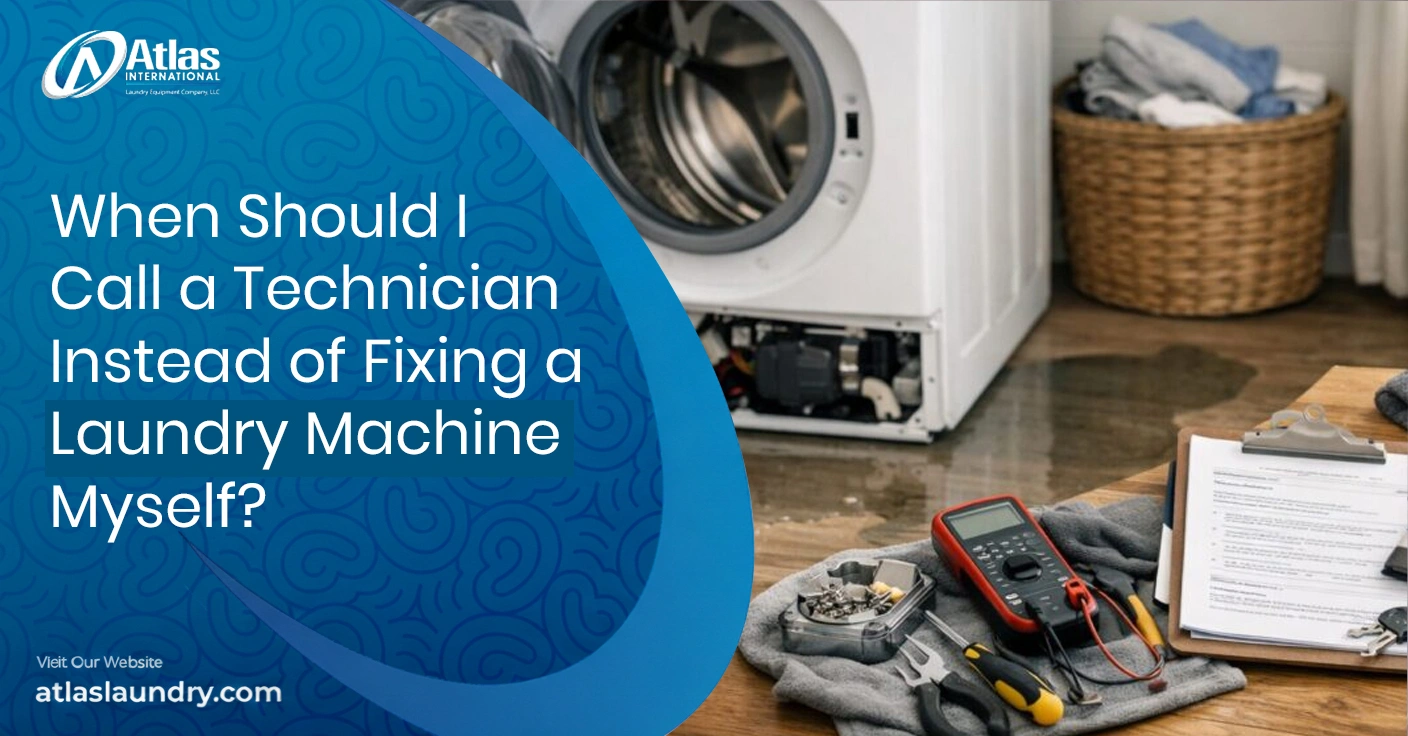
Call somebody the moment electrical, gas, water, or heating components enter the picture. That’s the line. Clearing a lint screen or resetting a tripped breaker is fine for anyone. Opening a control panel, chasing a gas valve, or poking at heating elements is not, and on commercial machines it can void your warranty. Burning smells and smoke mean stop immediately and call. Knowing when to call a laundry technician keeps a small repair from becoming an expensive one.
Key Takeaways
|
What Laundry Machine Problems Can You Fix Yourself?
Plenty, actually. A fair number of service calls turn out to be something the operator could have sorted in ten minutes.
Start with the obvious. Lint screens need clearing after every load, and a clogged one is behind more dryer complaints than anything else. Washer drain filters collect coins, buttons, and the occasional pen, and most pull out by hand. Water inlet screens clog with sediment over time and rinse clean.
Then there’s the stuff that isn’t really a fault at all. A machine that rocks and bangs is usually just unlevel, so adjust the feet. A washer that won’t fill might have a closed supply valve or a kinked hose. Doors that won’t latch are often a worn gasket or something caught in the seal.
Resetting a tripped breaker counts too, once. Twice means something electrical is wrong and you want a technician rather than another reset.
When Should You Call a Laundry Machine Technician?
Six situations. Each one means stop and make the call.
The Machine Will Not Start or Keeps Shutting Down
You’ve checked the power, the door latch, and the breaker, and it still won’t run. Now you’re into control boards, wiring harnesses, door lock assemblies, or motor faults.
Mid-cycle shutdowns are worse news than a dead start. Something is tripping a safety, and safeties exist because the alternative is a fire or a flood. Repeatedly restarting a machine that keeps quitting is asking for trouble.
You Notice Burning Smells, Smoke, or Electrical Problems
This one’s simple. Cut the power and call. Burning smells mean overheating somewhere: a motor, a belt, wiring, or lint that’s found its way somewhere hot. Sparks, flickering lights when the machine kicks on, or a breaker that trips whenever it runs all point at electrical faults. Commercial laundries have burned down from exactly this. Nobody should be investigating it with a screwdriver.
The Washer Leaks Water or Will Not Drain
Check the easy things first. Hose connections, the drain filter, an obvious blockage. Past that, you’re looking at pump failures, worn door seals, cracked tubs, or a drain line problem in the building itself. Water damage escalates fast in a laundry, and a leak that looks minor at closing time can take out flooring and anything stored nearby overnight.
The Dryer Overheats or Takes Too Long to Dry
A dryer needing two cycles is costing you money every single load. On a busy floor that adds up quickly. Start with the lint screen and vent, since restricted airflow causes most of it. If those are clear and it’s still slow, the problem sits in the heating element, the gas valve, the thermostat, or a blocked vent run inside the walls. Gas components are technician territory, full stop. Overheating is a genuine fire risk and the leading cause of dryer fires is lint buildup.
The Machine Makes Unusual Noises or Vibrates Excessively
Noises tell you things. Grinding usually means bearings. Squealing points at belts. Banging during spin suggests the drum or suspension.
Rule out an unlevel machine or an unbalanced load first, because those explain a surprising number of complaints. If it’s level and still shaking hard, keeping it running will turn a bearing replacement into a new machine.
Error Codes Keep Returning
Modern commercial equipment reports its own faults, which is useful. Look the code up in your manual and do whatever simple fix it suggests.
When the same code comes back a day later, the fix didn’t address the cause. Technicians have diagnostic tools that read beyond the displayed code, and that’s what sorting out a recurring fault actually takes.
Why Commercial Laundry Equipment Needs Professional Repairs
Commercial machines are not big versions of what’s in your utility room. They’re built differently and they fail differently.
Many run on three-phase power, which is genuinely dangerous to work on without training. Gas dryers involve valves, igniters, and combustion safety systems where a mistake leaks gas or produces carbon monoxide. Industrial washers spin hard enough that a failed suspension component becomes a projectile.
The warranty question matters too. Most manufacturers specify repairs by authorized technicians, and unauthorized work voids coverage, which is how a small repair turns into an uncovered replacement.
There’s also the commercial reality that your home machine never had. Every hour down is lost revenue, and a technician with the right parts fixes it this afternoon rather than after a week of guessing and ordering components one at a time.
DIY Laundry Machine Repair vs Professional Service
It isn’t all or nothing. Knowing where the boundary sits is what saves you money on both sides of it.
When Basic Troubleshooting Makes Sense
Anything reachable without removing panels. Lint screens, drain filters, inlet screens, hose connections, leveling feet, door seals you can see.
Simple resets qualify, as does checking that a machine is plugged in and the breaker hasn’t tripped, which sounds obvious and solves more problems than anybody admits. Running a cleaning cycle on a washer that smells is routine maintenance rather than repair.
Train your staff on this layer. An attendant who clears a drain filter saves you a service call, and the same attendant who knows when to stop saves you a machine.
When Professional Repair Is the Better Choice
Panels off means pro. Full stop, and that covers control boards, motors, belts, bearings, heating elements, gas valves, pumps, and wiring. Safety-critical systems always go to a technician. Anything involving gas, three-phase power, or high-pressure water is not a place to learn by trying. Equipment still under warranty should go to an authorized tech regardless of how straightforward the fault looks.
And when a problem keeps coming back after you’ve fixed it twice, that’s the machine telling you the real cause is somewhere you haven’t looked.
What Can Happen If You Delay Calling a Technician?
Small faults rarely stay small. That’s the whole problem with waiting. Worn bearings are the classic example. Caught early it’s a parts-and-labor job. Left running, the drum goes out of true, the shaft scores, and now you’re pricing a replacement machine instead. Same story with a slow leak that quietly ruins subflooring over months.
Safety risks escalate rather than plateau. Lint accumulating in a dryer vent is a fire waiting for its moment. A gas fitting that’s seeping slightly keeps seeping. Electrical faults that trip a breaker occasionally start tripping it constantly, and then something melts.
The business cost is quieter but real. Customers notice machines that take two cycles or leave clothes damp, and they’ll drive past you to somebody whose equipment works. An on-premise laundry that falls behind creates problems across the whole operation.
How Can Regular Maintenance Reduce Laundry Machine Breakdowns?
Scheduled maintenance costs less than emergency repair, every time, without exception. A proper preventive program covers things nobody does on a busy Tuesday. Full vent cleaning beyond the lint screen, inspecting belts and bearings before they fail, checking gas connections and water lines, calibrating controls, verifying safety systems actually work.
Daily habits carry a lot of weight too. Lint screens after every load. Drain filters weekly. Wiping door seals so they don’t perish. Keeping a simple log of which machine does what, because patterns show up in writing that nobody notices otherwise.
Most operators find twice yearly professional servicing about right, moving to quarterly on high-volume floors. Your manufacturer will specify intervals, and following them protects your warranty as well as your machines.
How Do You Know When to Schedule Commercial Laundry Equipment Service?
Some of it is calendar work and some of it is paying attention. Book routine service at the intervals your manufacturer specifies, before peak season rather than during it. A laundromat heading into winter wants everything checked in autumn, not in January when a dryer quits.
Beyond the schedule, these are worth a call:
- Cycle times creeping longer than they used to be
- Utility bills climbing without more volume to explain it
- Several machines developing small faults around the same time
- Equipment approaching the age where components typically start failing
- Anything that fixed itself, because intermittent faults rarely stay gone
Also call when you’re planning rather than reacting. Adding machines, changing your mix, or taking on a new contract all have implications for equipment that are cheaper to think through in advance.
Conclusion
The boundary is panels. Lint screens, drain filters, leveling feet, hose connections, a single breaker reset: all yours. Anything behind a panel, anything involving gas or three-phase power, and anything that smells like burning belongs to a technician. Commercial equipment punishes delay, turning worn bearings into replacement machines and lint buildup into fire risk. Regular servicing costs less than emergency callouts, and recurring error codes mean the real fault is still there.
Need equipment looked at properly in Texas, Oklahoma, or Louisiana? Atlas International has supplied and serviced commercial laundry equipment and can get a technician to your machines.