
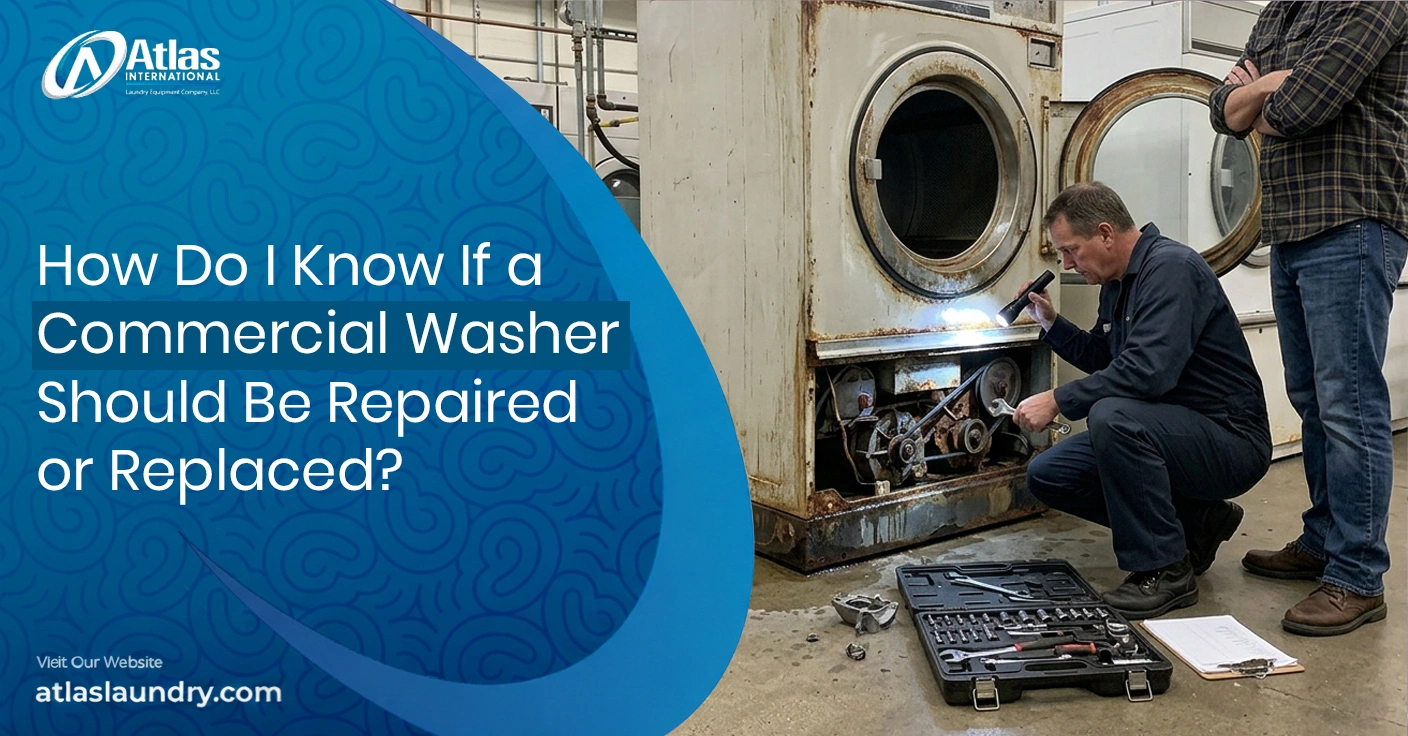
Repair the washer when the problem is minor, the machine is still in the first half of its working life, and the quote is well under half the price of a new one. Replace it when the same faults keep coming back, a major part like the bearings or tub has failed, or parts for your model are hard to find. The 50 percent rule can help guide the decision. If a repair costs more than half the price of a comparable new washer, consider replacing it. The machine’s age, repair history, expected lifespan, and downtime costs should also factor into the decision.
Key Takeaways
- Apply the 50 percent rule before you approve any large repair.
- Keep a log of every service call. Three calls in a year on one machine is a warning sign.
- Put every commercial washer repair or replacement choice in dollars. Count the repair cost, the utility savings and the lost revenue.
- Replace sooner if parts for your model are slow to arrive.
- Get a written repair quote and a written replacement quote side by side.
What Signs Suggest a Commercial Washer Needs Repair or Replacement?
Five signs matter most. One alone is rarely a verdict. Two or three together usually are.
Frequent Breakdowns and Recurring Service Calls
Start a simple log. Write down the date, the error code, the part and the cost for every call. After a year the pattern is hard to ignore. Several service calls in one year deserve attention, especially when the same fault keeps returning. Review the total repair cost and ask the technician whether the underlying problem has been resolved.
Rising Water and Energy Bills
Compare this year’s utility bills with last year’s. Old washers drift. Cycles run longer. Seals leak a little. Spin speeds drop. Each one adds a few cents per load. Multiply that by ten loads a day and the cost becomes real. A washer that quietly wastes water is often the most expensive machine on your floor.
Poor Washing Results or Inconsistent Cycles
Clothes come out still dirty or soaking wet. Cycles stop halfway. Customers start telling you machine 7 is “weird.” Wet loads also push extra work onto your dryers and raise your gas bill. A weak spin can result from drainage problems, an unbalanced load, incorrect settings, or worn mechanical parts. Have the machine checked if the issue keeps happening.
Leaks, Excessive Vibration, or Unusual Noises
Not every leak is serious. A worn door gasket is a cheap fix. A leak from the tub seal is a different story. Grinding or rumbling during the spin often means worn bearings. Heavy shaking can point to failing suspension or a damaged drum. It can also loosen anchor bolts and crack the floor.
Difficulty Finding Replacement Parts
Ask your technician how long a part will take. Weeks is bad news. Parts for discontinued models get scarce and expensive over time. A machine that can’t be repaired quickly is a machine that will sit idle.
When Is Repairing a Commercial Washer the Better Option?
Repair makes sense when three things line up. The fault is small. The machine still has years left. The price is low next to a new unit.
The Problem Is Minor and Easy to Fix
Some failures are routine wear. These usually have cheap and quick fixes:
- Door gasket or door lock
- Drain pump or drain valve
- Water inlet valve
- Drive belt
- Loose wiring or a worn switch
A good tech can fix most of these in one visit. Parts are common and the machine is back on the floor the same day. Don’t replace a washer over a $150 part.
The Washer Is Still Within Its Expected Service Life
Commercial washers often run about 10 to 15 years depending on the model and how hard you use them. A machine in its first five to seven years usually deserves a repair. It may also still be under warranty. Check before you pay. Heavy use shortens the clock, though. A washer that runs eight cycles a day ages faster than one that runs three.
Repair Costs Are Reasonable Compared With Replacement
Get a written quote and compare it with the price of a similar new machine. If the repair is well under half and the rest of the machine is sound, fix it. Ask the tech one more thing. What else is likely to fail soon? An honest answer helps you decide.
When Should You Replace a Commercial Washer Instead?
Replace when the machine costs more to keep than to retire.
Repair Costs Keep Adding Up
Add up everything you spent on one machine over the last two years. Include parts and labor and trip fees. If the total is approaching half the price of a new washer you are already paying for a new one. You just don’t have it. Small repairs feel harmless until you see them on one page.
The Machine No Longer Meets Laundry Demand
Sometimes the washer works fine and the business has outgrown it. Look at your Saturday mornings. Are customers waiting for large machines? Are you turning away comforter loads? A bigger or higher-capacity washer can earn more per cycle. A repaired machine of the wrong size is still the wrong machine.
Older Equipment Lacks Needed Features or Efficiency
Newer washers spin faster and extract more water. That shortens dryer time and cuts gas use. Many also accept card payments and report cycle data. Some older coin-operated machines may support payment upgrades, while others may not. Ask whether your existing models can be retrofitted before deciding to replace them.
Major Components Have Failed
Some failures are expensive by nature. Bearings and shaft seals mean pulling the tub apart and hours of labor. A cracked tub or a failed transmission is worse. Motor and control board failures can also be costly on older models. If a major component fails on an older machine, compare the repair quote with replacement costs and the likelihood of further breakdowns before deciding.
How Can You Compare Commercial Washer Repair and Replacement Costs?
Turn the decision into a short comparison. Four numbers do most of the work.
Calculate the Cost of Repairs and Repeat Breakdowns
Start with the quote in front of you. Then add what you spent on that machine in the past year. Then estimate the next year of repairs if it keeps failing. Compare that total with the cost of a new washer spread over its expected life. The cheapest option today is not always the cheapest option over three years.
Compare Utility Costs With Newer Equipment
Ask your supplier for the water use per pound of laundry on the new model. Check your local water and gas rates. Then compare it with what your old machine uses. High-extract washers also reduce drying time. A few cents saved per load adds up fast on a busy floor.
Consider Downtime and Lost Business
Downtime is the cost most owners forget. Suppose a large washer charges $8 per load and completes six loads a day. A full week out of service represents up to $336 in potential gross revenue before expenses. Actual losses depend on demand and whether customers switch to other machines. Customers who find a broken washer may not come back.
Review Warranty Coverage and Parts Availability
A repair may come with a short warranty on the part. A new washer may include separate warranty periods for certain components, parts, and labor. Check the manufacturer’s written terms to see what is covered, how long coverage lasts, and whether any exclusions apply. Ask what is covered and for how long. Also ask your service company how fast they can get parts for your model. Fast parts and local techs are a safer bet. Slow parts push the answer toward replacement.
Conclusion
Check the age first. Then check the log. Add up the repair bills and ask for a written quote. Use the 50 percent rule as your starting line and add downtime and utilities on top. Minor faults on a young machine usually deserve a repair. Major failures on an old one usually do not. For any commercial washer repair or replacement choice, the numbers on paper beat a gut feeling at the machine.
If you want help sorting out a repair or a replacement, talk to Atlas International. Their team can look at your machines and your volume and help you decide what is worth keeping. Call us today to review your laundry equipment.