
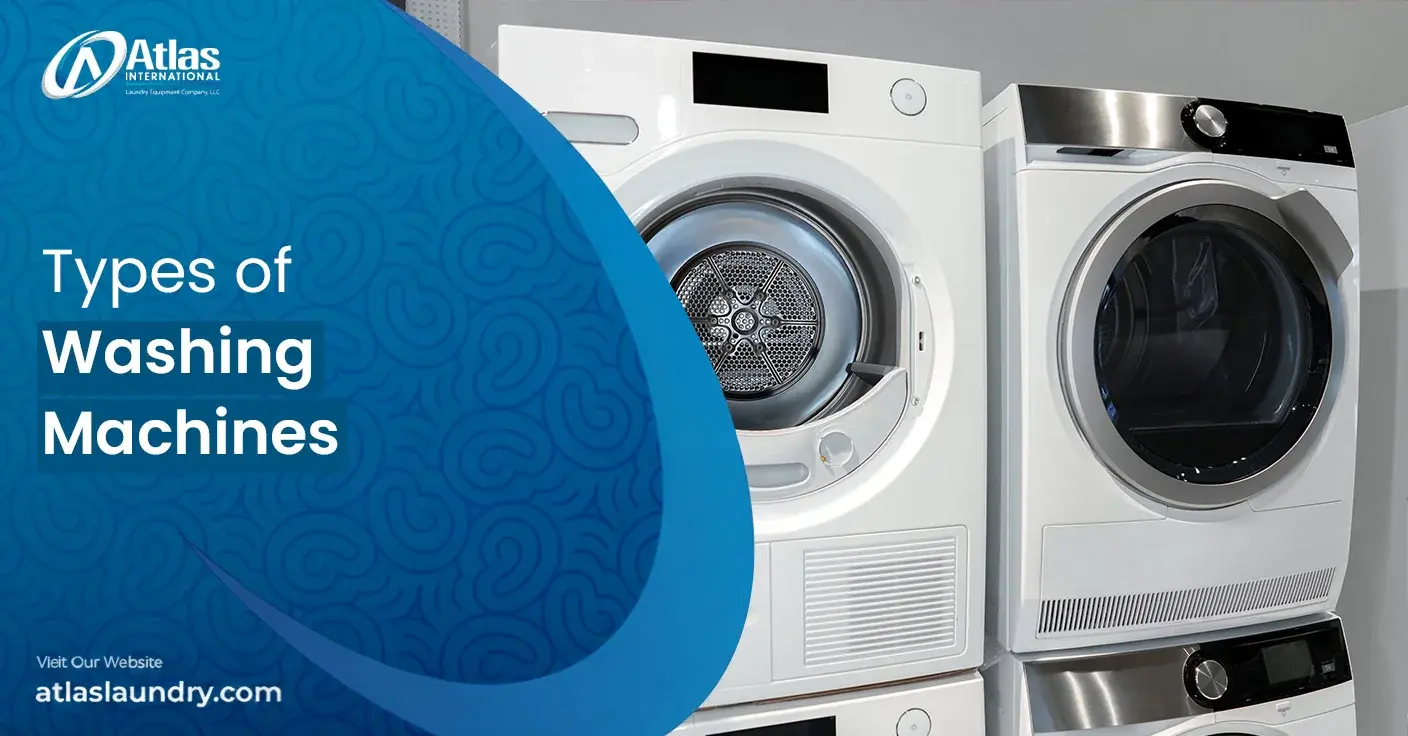
Choosing the right equipment for a laundry facility is a major decision. It is the heart of your operation. When you look at all the buttons and drum sizes, it can feel like a lot to take in. There are many different types of washing machine units available today. Some people look for specific machines that fit the volume of the job. So they may front-load washers, top-load washers or stackable units to save space. Whereas others may require high-capacity commercial washers, coin-operated machines, or advanced ironing and finishing systems.
The right choice depends on your daily load count and your budget for utilities. Understanding these categories helps you build a space that runs smoothly.
Different Washing Machine Types
The industry categorizes machines based on how they load and how they handle water. Experts say that matching the machine to the user is the key to success. If you are running a business, you aren’t just looking for a “washer.” You are looking for a tool that can survive hundreds of cycles every month without breaking down.
It is not unusual for a facility to mix and match these types. Here are the main categories that professionals use to outfit modern laundry rooms.
1. Front-Load Washers
These are the gold standard for high-efficiency cleaning. Professionals say these machines use a tumbling action that is much gentler on fabrics than a traditional agitator.
- They use significantly less water and electricity per load.
- The high-speed spin cycle removes more water, which cuts down on drying time.
For example, a hotel might use these to preserve the life of expensive white towels.
2. Top-Load Washers
Many experts still prefer top-loaders for their simplicity and ease of use. You don’t have to bend down to load them which is a big plus for many users.
- They often have faster cycle times than front-load models.
- It is not unusual to find these in laundromats because they are easy to maintain.
For instance, if a user forgets a sock, they can usually pop the lid and toss it in mid-cycle.
3. Stackable Washer-Dryer Units
When floor space is at a premium, professionals recommend stackable units. These are perfect for multi-housing projects or small fitness centers.
- They provide the same cleaning power in half the footprint.
- Experts often suggest these for “in-unit” laundry setups in apartment buildings.
Using vertical space allows you to double the number of machines in a small room.
4. High-Capacity Commercial Washers
These are the heavy hitters of the laundry world. They are built with industrial-grade stainless steel and heavy-duty bearings.
- They can handle massive loads. Sometimes up to 100 pounds or more.
- Professionals say these are essential for hospitals or industrial workwear facilities.
For example, these machines can handle heavy blankets and rugs that would snap the belt on a home machine.
5. Coin-Operated and Card-Ready Machines
For business owners, the way a machine takes payment is just as important as how it washes. Experts say that card-ready systems are becoming the new standard.
- They eliminate the need for collecting and hauling heavy bags of quarters.
- These machines often come with “smart” tracking so owners can see usage data.
It is not unusual for modern systems to allow customers to pay via a phone app.
6. Integrated Ironing and Finishing Systems
While not a “washer” in the traditional sense, professionals often group these with cleaning equipment. They are the final step in a high-end laundry line.
- These systems dry and press linens in one pass.
- Experts say these are vital for high-end dining or boutique hotels.
They ensure that every sheet and tablecloth looks crisp and professional.
Why the Type of Machine Matters
Choosing the wrong machine can lead to high utility bills and unhappy customers. Professional installers emphasize that “one size does not fit all” in the laundry world.
- Utility Savings: A front-loader might cost more upfront but experts say it pays for itself in water savings within a few years.
- Maintenance Costs: Simple top-loaders are often cheaper to fix because their parts are easy to access.
- Customer Satisfaction: If you run a laundromat, having a variety of sizes allows your customers to wash everything from small delicates to giant comforters.
For example, imagine a gym that installs small home-style washers. Within six months, the motors would likely burn out from the heavy, wet towels. A professional would have suggested high-capacity industrial units from the start to avoid that replacement cost.
Conclusion
Navigating the world of laundry equipment is about finding the balance between durability and technology. When you look at the various types of washing machines, from stackable units and top-load washers to front-load washers, the goal is always efficiency. Professionals say that the best way to choose is to look at your long-term goals. High-capacity commercial washers, coin-operated machines, and ironing and finishing systems all play a part in a professional setup. By selecting the right mix of equipment, you can ensure your facility remains a reliable part of your business operation. We are here to help you design and equip the perfect laundry room with the most advanced technology available today at Atlas International.
Frequently Asked Questions
What is the most common type of washing machine?
Top-load automatics are the classic favorite. They are easy to use. They are quick to load. They work well for everyday laundry.
Which type of washing machine is best for home use?
Front-load machines are quiet. They save water and are gentle on clothes. This makes them ideal for homes. Top-load machines are good too. They are convenient to use for most families.
Which is better, an automatic or manual washing machine?
Automatic machines are convenient. They do the thinking, the timing, and the rinsing for you. Manual machines give you more control and save water. You just have to do a bit more elbow work. Choose what fits your style.
What is the latest technology in a washing machine?
Modern commercial washing machines have digital controls. They include automatic cycle settings. Some features optimize water and energy use. Certain machines offer specialized programs for different fabrics or heavy-duty loads. These technologies are designed for efficiency and consistent results in commercial settings.