
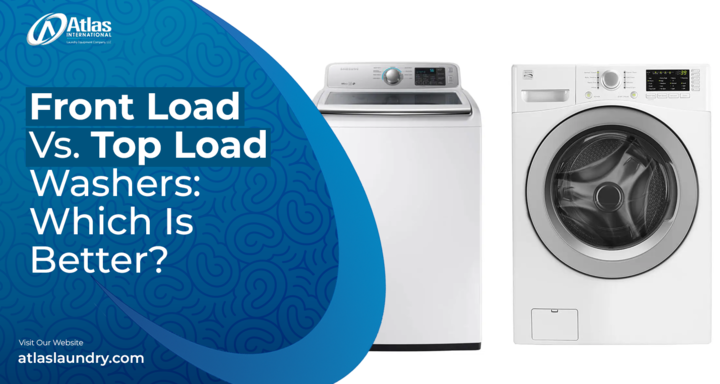
Choosing a washing machine often comes down to one simple question: front-load or top-load? Both have their own features, and deciding which is better depends on your needs, preferences, and laundry routine. Both styles are effective, but they excel in different ways. Multiple factors, including speed, capacity, convenience, energy efficiency, cleaning performance, and washing cycle times, contribute to determining the most suitable option between front-load and top-load washers. Figure out what matters most to you: ease, cost, or long-term savings, and that will point you to the right machine.
What Is a Front-Load Washer?
A front-load washer is a washing machine with a door on the front, where clothes are loaded horizontally into a rotating drum. It cleans by tumbling laundry through a small amount of water, which makes washing gentle and efficient. These machines are known for using less water, offering strong cleaning performance, and they handle larger loads gently because tumbling is less stressful on fabrics.
What is a Top-Load Washer?
A top-load washing machine is a washer where you drop clothes in from the top, so you can load and unload without bending much. It cleans with either an agitator that spins clothes around or an impeller that shifts water for a softer wash. This type is usually quicker, easier to operate, and typically uses more water than front-load washers.
Key Comparison Factors Between Front-Load and Top-Load Washers
Below are the key factors to consider when choosing between them. I kept the list practical, so you can match each point to your routine.
Cleaning Performance
- Front-loaders often clean deeper because the tumbling action moves clothes through the water more effectively. They’re usually gentle and require less rubbing.
- Traditional top loaders with agitators can be rougher on fabrics, although they still clean clothes effectively for everyday loads.
Water Efficiency
- Front loaders win here. They don’t need to fill the drum to wash, so they use noticeably less water.
- Top loaders usually fill more to get everything wet. Newer high-efficiency top loaders are more efficient, but classic top loaders still use more water.
Energy Efficiency
- Front-loaders use less water, and they are usually kinder to your energy bill. Heating less water means lower energy use.
- Top loaders can be more expensive to run if they use more water and require more heat, although modern models are narrowing the gap.
Cycle Time
- Front-loaders can run longer (60–90 minutes) because their energy-saving cleaning takes more time.
- Top-load cycles tend to be quicker, often in the 30–40 minute range.
Load Capacity
- Front-loaders hold more clothes. If you regularly wash bulky items (blankets, bedding) or large family loads, a front loader gives you more space.
- Top loaders are fine for singles or small families. It has a reasonable load capacity.
Ease of Use
- Front loaders require bending to reach the drum, though a pedestal can help. Also, front-load panels often have more settings, handy if you like to customize cycles.
- Top loaders are easier if you don’t like bending. Controls are usually intuitive and on top, where you can see them.
Durability
- Front-loaders may get mold or mildew around the door seal if they do not get enough air regularly.
- Top loaders with agitators typically have fewer of those seal-related problems.
Cost
- Front-loaders are typically more expensive, and repairs can be more costly. But if you care about long-term water and energy savings, a front loader may pay for itself over time.
- Top loaders are generally cheaper to purchase and often more cost-effective in the long run.
Quick Comparison Table Between Front-Load and Top-Load Washers
This comparison table gives a clear comparison between front-load and top-load washers, making the decision easy.
| Feature | Front-Load Washer | Top-Load Washer |
| Cleaning Performance | Excellent, gentler on clothes | Good, may be rougher with agitators |
| Water Efficiency | Uses less water | Uses more water (traditional models) |
| Energy Efficiency | More energy-efficient overall | Less so, but newer models are improving |
| Cycle Time | Longer (60–90 minutes) | Shorter (30–40 minutes) |
| Load Capacity | Larger, better for big loads | Generally smaller, good for small households |
| Ease of Use | You’ll bend; more settings | Easier to load; simple controls |
| Durability | Watch the door seals for mold | Fewer seal issues, simpler upkeep |
| Cost | Higher upfront costs can save long-term | Lower upfront and repair costs |
Front-Load Washer vs. Top-Load Washer: Which One Should You Choose?
Your decision depends on what matters most to you and your household. If your priorities include saving water, maximizing energy efficiency, and handling larger loads, a front-load washer is the better choice. Although it may cost more upfront, it delivers long-term savings and superior cleaning performance.
On the other hand, if you want an affordable, faster, and more user-friendly washer, a top-load model is a practical option. It’s especially suitable for smaller families, limited budgets, or anyone who prefers a machine that’s simple and quick to use.
Conclusion
Both front-load and top-load washers are effective, but the right choice depends on your lifestyle and laundry habits. Front-load washers excel in water savings, energy efficiency, and handling larger or bulkier loads. Top-load washers, on the other hand, offer quicker cycles, easier use, and a more budget-friendly option for everyday washing.
Consider how often you do laundry, the types of items you wash, and whether you prioritize convenience or long-term efficiency. Once you weigh these factors, the best option for your home will become clear.
If you are looking for reliable front-load and top-load washers, you can check out Atlas International for top-quality washing items or guidance.